
The Legendary Chicago Hot Dog: A Bite-Sized History of the City
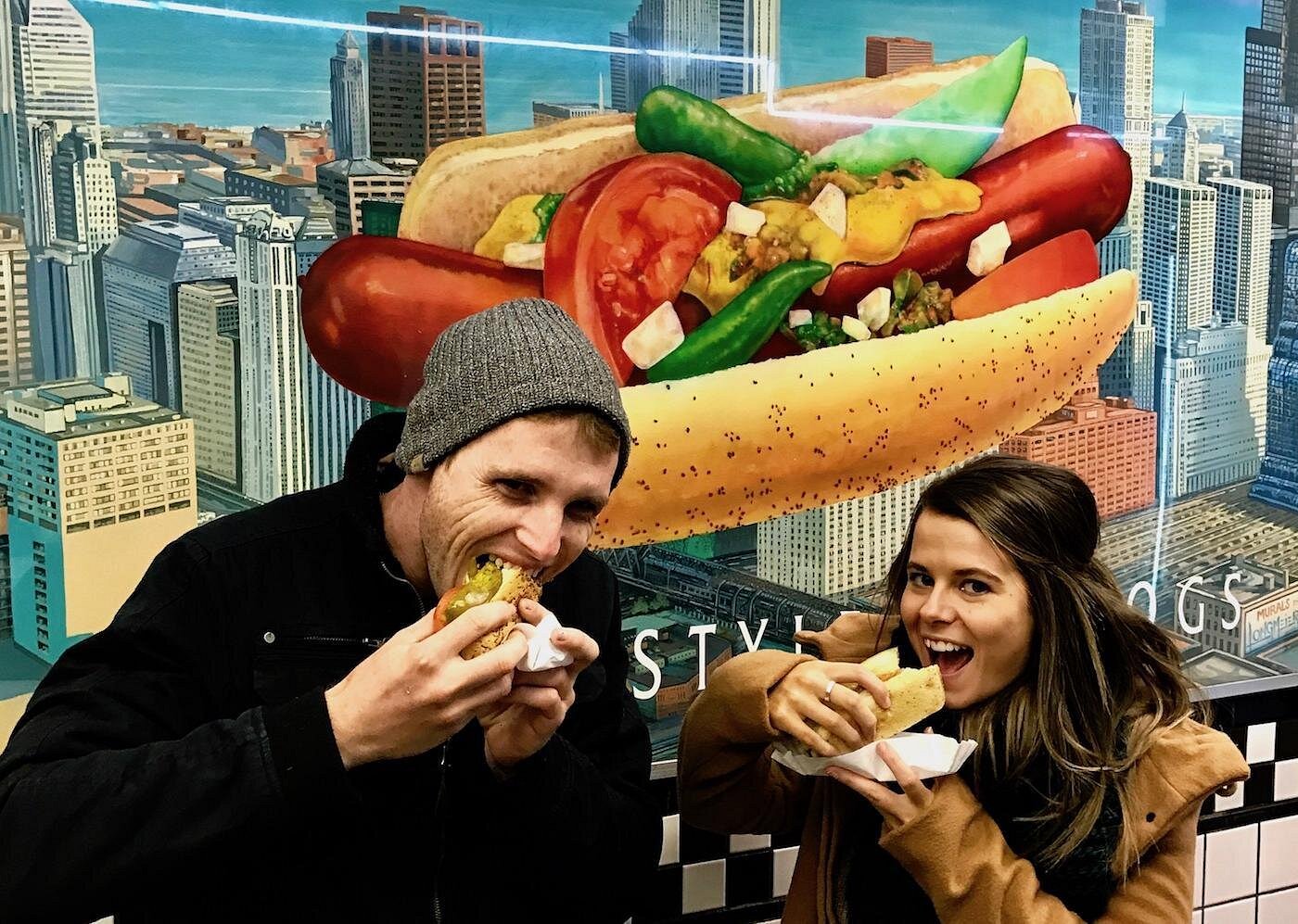
Few foods tell Chicago’s story as perfectly as the Chicago-style hot dog. It is fast, colorful, practical, a little stubborn, and proudly local. Served on a poppy seed bun and “dragged through the garden,” the classic Chicago dog is more than lunch. It is a city tradition wrapped in paper, eaten at a counter, on a curb, after a game, or during a day of exploring the lakefront.
The legend begins in the late 1800s, when European immigrants helped make sausages a staple of Chicago’s working-class food scene. Vienna Beef traces its roots to the 1893 World’s Columbian Exposition, where Austrian-Hungarian immigrants introduced their frankfurters to hungry fairgoers. By the Great Depression, the Chicago hot dog had become a filling, affordable meal. For just a few cents, vendors could serve an all-beef dog loaded with toppings, giving customers the feeling of a full meal in one bun. It was inexpensive, portable, and satisfying, which made it perfect for factory workers, families, baseball fans, and anyone moving quickly through a busy city.
So what makes it official? Start with an all-beef frank, traditionally steamed, tucked into a warm poppy seed bun. Then comes yellow mustard, bright green relish, chopped white onions, tomato wedges, a dill pickle spear, sport peppers, and a final shake of celery salt. The result is sweet, sour, spicy, salty, crunchy, juicy, and unmistakably Chicago. The one ingredient that does not belong is ketchup. Ask for it if you must, but expect a look. Chicagoans take the rule seriously because the toppings already bring sweetness, acidity, heat, and crunch in perfect balance.
Part of the magic is that every stand has personality. Superdawg Drive-In, with its giant rooftop hot dog mascots, is a nostalgic Northwest Side classic and a must for anyone who loves old-school Chicago. Gene & Jude’s in River Grove serves a stripped-down Depression-style dog with fries piled right on top. Jimmy’s Red Hots keeps the same no-nonsense spirit alive on the West Side. The Wieners Circle in Lincoln Park is famous for char dogs, late-night energy, and attitude. Fatso’s Last Stand brings a serious char dog game, while Portillo’s remains an easy, crowd-pleasing stop for visitors who want a classic Chicago dog with an Italian beef backup plan.
If you want to eat like a local, do not overthink it. Order the dog the way the stand serves it, grab fries if they are offered, and take a few minutes to notice the rhythm of the place. The counter chatter, the hiss of the grill, the paper bags, the neon signs, and the neighborhood regulars are all part of the experience. The best Chicago hot dog is not always the fanciest one. Often, it is the one you eat while standing outside on a warm afternoon, or the one that saves the night after a concert, game, or long day downtown.
The best way to understand the Chicago hot dog is to make it part of a bigger Chicago day. Pair it with a walk along the river, a neighborhood food crawl, a ballgame, a museum visit, or a night out downtown. That is where Seas the Day Chicago comes in. Seas the Day Chicago helps visitors and locals discover memorable dining and entertainment experiences throughout the city, making it easier to turn a simple craving into a full Chicago adventure.
If you are planning a trip, hosting guests, or looking for a new way to experience the city, browse Seas the Day Chicago for ideas that go beyond the usual itinerary. A Chicago hot dog stop can be the perfect beginning, middle, or finale to a day filled with skyline views, neighborhood flavor, and the kind of local character that makes the city unforgettable.
In the end, the Chicago hot dog is legendary because it refuses to be ordinary. It has rules, history, attitude, and just enough chaos to make every bite interesting. It is not fancy, and it does not need to be. It is Chicago in edible form: bold, layered, practical, proud, and best enjoyed with both hands.